Tag: IP

Innovation

Invention Spotlight: U.S. Patent Issued for Simultaneous Biomarker Detection in Diffuse Glioma

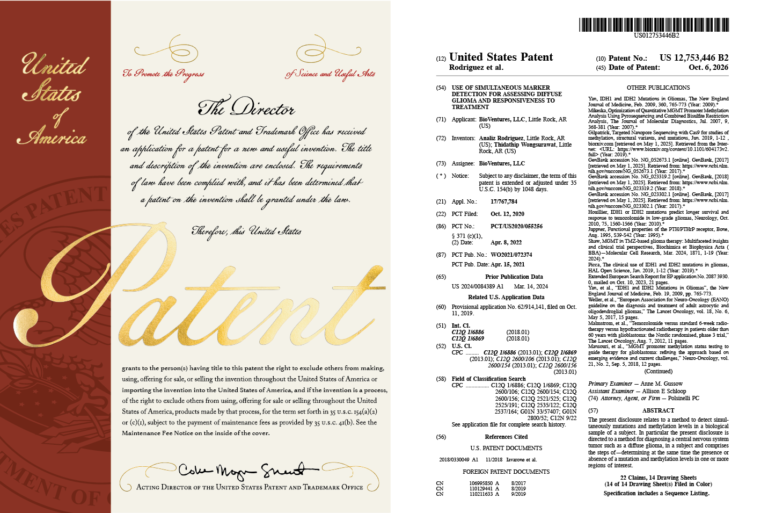
Congratulations to inventors Analiz Rodriguez and Thidathip Wongsurawat on the issuance of U.S. Patent No. 12,753,446, titled Use of Simultaneous Marker Detection for Assessing Diffuse Glioma and Responsiveness to Treatment. Issued on October 6, 2026, the patent describes a molecular analysis method designed to improve the assessment of brain tumors by simultaneously detecting genetic mutations and DNA methylation patterns associated with diffuse gliomas.  Diffuse gliomas are a group of brain tumors that can be challenging to diagnose and treat due to their molecular complexity. Identifying specific genetic and epigenetic biomarkers plays an important role in characterizing these tumors, understanding their progression, and informing treatment decisions. However, conventional testing methods often require separate analyses of different biomarkers, increasing the time and complexity involved in obtaining comprehensive molecular information.  This patented technology addresses that challenge through a method that simultaneously evaluates mutations in the IDH1 and IDH2 genes and methylation levels in the MGMT gene, three important molecular markers associated with glioma diagnosis, prognosis, and treatment response.  The approach uses CRISPR-Cas9 targeted nanopore sequencing, a technique that enables researchers to analyze specific regions of DNA and identify multiple molecular characteristics within a single sequencing workflow. By combining mutation detection and methylation analysis, the method offers a potentially more efficient way to characterize brain tumors and assess their molecular profiles.  The technology also has potential applications in evaluating responsiveness to treatments such as temozolomide, a chemotherapy drug commonly used in glioma care. Understanding these molecular markers could help clinicians make more informed treatment decisions and support the development of personalized therapeutic strategies.  The patent represents an advancement in molecular diagnostics and precision oncology, with the potential to streamline biomarker analysis and improve how researchers and clinicians assess diffuse gliomas. Further clinical development and validation would be needed to establish its use in routine patient care.  BioVentures congratulates Dr. Rodriguez and Dr. Wongsurawat on this achievement and recognizes their contributions to advancing molecular diagnostics and precision medicine for patients with brain tumors.  Inventors  Analiz Rodriguez, M.D., Ph.D.  Associate Professor, Department of Neurosurgery  Director of Neurosurgical Oncology  UAMS College of Medicine  Thidathip Wongsurawat, Ph.D.  Adjunct Faculty, University of Arkansas for Medical Sciences  Division of Medical Bioinformatics, Faculty of Medicine Siriraj Hospital, Mahidol University  This technology is currently available for licensing. For more information or to discuss potential licensing opportunities, please contact BioVentures at bioventures@uams.edu.
Read More »
Events

BioVentures participates in AUTM University Conference 2025 in New Orleans  

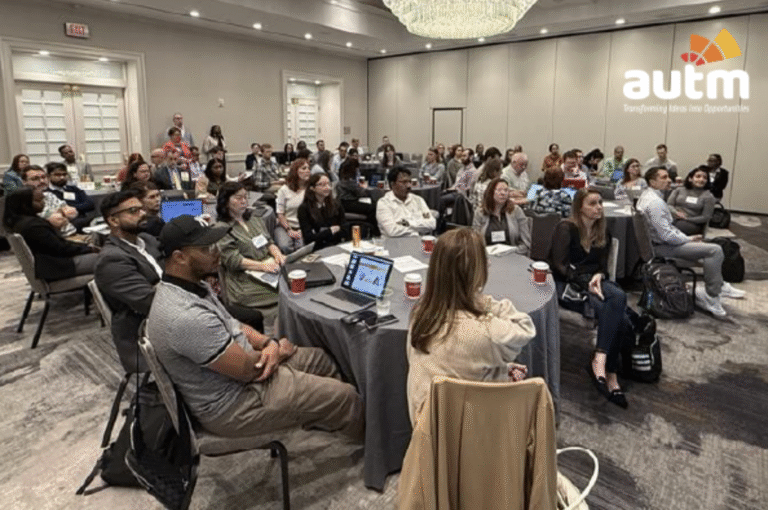
BioVentures participated in the AUTM University Conference 2025, held from October 26–29 in New Orleans. The event brought together professionals from technology transfer offices across the country to exchange knowledge, explore emerging trends, and strengthen collaboration within the tech transfer community.  The conference offered a valuable opportunity to learn from experts, exchange best practices, and strengthen collaboration across the national tech transfer network.  “From insightful sessions to meaningful networking moments, this experience was truly inspiring,” said Britney Bobo, Project Coordinator at BioVentures. “I had the chance to learn from industry experts, share ideas with peers, and dive deeper into the evolving world of tech transfer and innovation.”  By taking part in AUTM University, BioVentures reinforces its commitment to advancing technology commercialization and promoting innovation through collaboration and professional development. 

Read More »
News

Dr. Megan Reed Awarded the Susan Riley Keyes Memorial Fellowship 

We’re proud to share that our Senior Licensing Associate, Megan Reed PhD, MBA has been selected as a 2025 recipient of the Susan Riley Keyes Memorial Fellowship from the AUTM Foundation. This highly competitive fellowship supports early-career technology transfer professionals through:  • Mentorship from seasoned leaders in the field  • Specialized training in invention evaluation, patenting, licensing, and commercialization  • Full access to AUTM educational resources, including the Technology Transfer Practice Manual and webinar library  • Registration, travel, and lodging for the AUTM Essentials Course, AUTM Annual Meeting, and regional meetings  • Networking opportunities with a national cohort of fellows and industry experts  Only three fellows were selected from a pool of  50 applicants, and Megan is one of them. This fellowship will deepen her expertise and broaden her professional network, further strengthening BioVentures’ ability to support UAMS innovators and drive the commercialization of life-changing biomedical technologies.  Join us in congratulating Megan on LinkedIn!

Read More »
News

A New Antibody Detects a Hidden Cancer Signal 

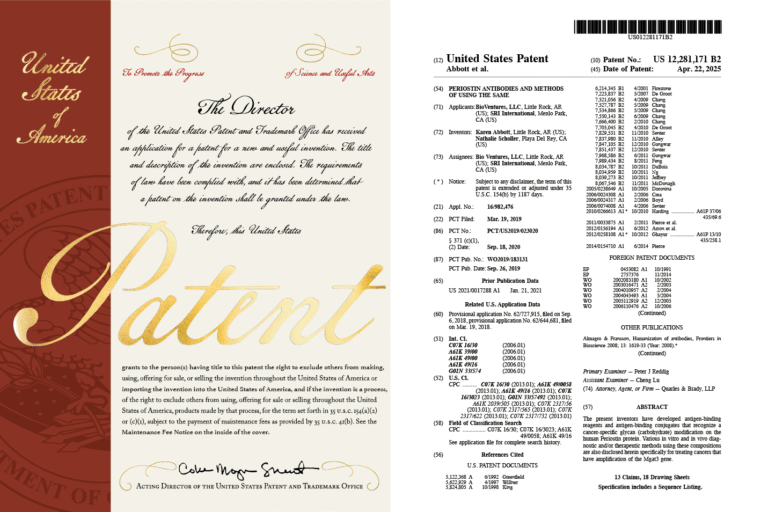
Newly granted patent: U.S. Patent No. 12,281,171 B2, “Periostin Antibodies and Methods of Using the Same” What’s the problem? Some cancers create a unique “signal” by adding a rare sugar modification to proteins like periostin. This tumor-specific marker could help identify and target cancer, but it’s extremely difficult to detect. Traditional tools often miss it because these sugar structures are hard for the immune system to recognize.  What does this technology do? This patent covers a new monoclonal antibody, C9, that targets the sugar marker not the whole protein. Using samples from ovarian cancer patients, inventors at UAMS identified an antibody that binds precisely to this cancer-specific structure. In mouse models, this C9 antibody successfully located and attached to tumors, showing strong potential for cancer imaging and targeted treatment. 

Read More »
Blog

Bringing Discoveries to Life: Technology Transfer at UAMS 

Every breakthrough at the University of Arkansas for Medical Sciences (UAMS) starts the same way: a question, an experiment, a spark of insight. Yet fewer than 10% of academic discoveries are ever licensed, and even fewer become commercial products, because the gap between lab work and real-world adoption is wider than it looks.  That’s where technology transfer, and BioVentures, steps in.  What Exactly Is Technology Transfer?  In simple terms, technology transfer (or “tech transfer”) is the structured hand-off of intellectual property (IP), data and know-how from a research institution to an outside partner that can turn it into a product, service or startup. At UAMS, tech transfer means:  Why It Accelerates the Path to Market  Great research doesn’t always lead to real-world impact, at least not on its own. In fact, many promising discoveries stall in the gap between publication and commercialization. Without structured support, this “valley of death” can prevent life-changing technologies from ever reaching patients, products, or public benefit.  That’s where technology transfer makes the difference. By removing common roadblocks, it turns isolated breakthroughs into scalable innovations.  Here are three key barriers in traditional academic research, and how technology transfer helps overcome them:  1. No Clear Ownership = No Investment  Most companies won’t touch an invention unless it’s clearly protected. If the intellectual property (IP) isn’t patented or officially disclosed, it becomes risky. No one wants to invest in something they can’t legally control or defend.  Tech transfer solution: BioVentures helps UAMS researchers secure IP rights through provisional or utility patents. This provides legal certainty for potential partners and investors, paving the way for serious interest and funding.  2. Funding Gaps After Publication  Once a discovery is published, grant funding often slows down and there’s rarely institutional support to turn research into a product. That leaves many innovations in limbo.  Tech transfer solution: Through licensing agreements, BioVentures creates new revenue streams. Royalties and milestone payments help fund continued development, validation, and even new lines of research.  3. Limited Access to Commercial Partners  Researchers often lack direct access to industry players who could bring their technologies to market. Cold outreach rarely works, and there’s no playbook for navigating the startup or med-tech space alone.  Tech transfer solution: BioVentures maintains an active network of industry contacts, including venture firms, pharma companies, and medical device manufacturers. We make the introductions—and manage the conversations—so your science gets in front of the right people.  What’s in It for UAMS Inventors?  Your First Step: The Invention Disclosure  Submitting a disclosure takes ≈10 minutes and should be done before you publish or present.  Ready to Make an Impact?  Stay on top of funding calls, licensing success stories and practical IP tips. Subscribe to the BioVentures Newsletter and turn your research into real-world change.  Subscribe Now 

Read More »
Education

From Idea to Impact: How IP Powers Public Good

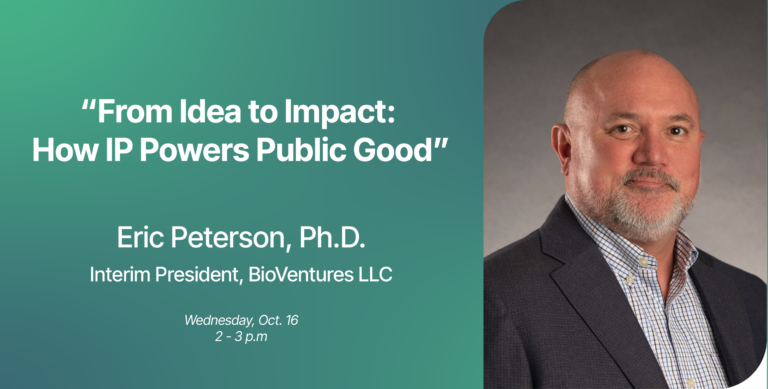
Join us at 2 p.m. Wednesday, Oct. 16, for Health Sciences Entrepreneurship Grand Rounds, featuring Eric Peterson, Ph.D., BioVentures LLC interim president, at the Winthrop P. Rockefeller Cancer Institute, Betsy Blass Conference Room, 10th Floor. In this session, “From Idea to Impact: How IP Powers Public Good,” Peterson will explore the pivotal role of intellectual property in driving public benefit.

Read More »
[searchandfilter fields="search,category,post_tag"]