Tag: UAMS

Innovation

Issued Patent Spotlight: Novel Approach to Protein Aggregation in Neurodegenerative Disease

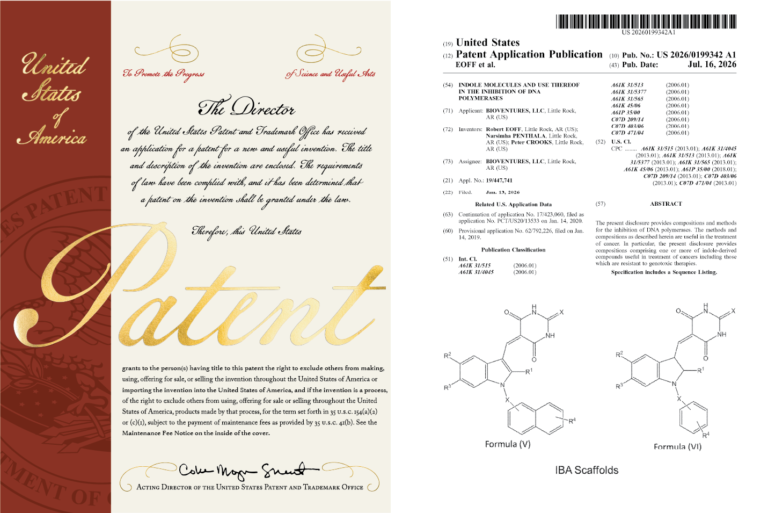
Congratulations to UAMS inventors Dr. Robert Reis, Dr. Peter Crooks and Dr. Srinivas Ayyadevara on the issuance of a new patent for a promising approach to targeting protein aggregation in neurodegenerative disease.   Neurodegenerative diseases such as Alzheimer’s, Parkinson’s, and Huntington’s disease are often linked by one major biological challenge: the buildup of toxic protein aggregates in the brain and central nervous system. While many therapies focus on managing symptoms or addressing downstream effects, there remains a significant need for approaches that target protein aggregation more directly.  This newly issued patent covers methods using combretastatin-A4 (CA4) and related analogs to prevent or reduce protein aggregation through compounds that bind glial fibrillary acidic protein (GFAP). The technology represents a new therapeutic direction for aggregation-associated disorders and suggests a potential disease-modifying strategy across multiple neurodegenerative indications.  Preclinical studies described in the patent showed encouraging findings across several model systems, including reductions in aggregate burden, decreases in amyloid accumulation, improved disease-related phenotypes, and lifespan extension in nematode models. Together, these results support the potential of a CA4-based platform as a differentiated approach for targeting protein-aggregation pathology in the central nervous system.  Inventors   Peter Crooks, M.Sc., Ph.D., D.Sc. (Manc), FRSC, FRPharmS, CSci, CChem, Professor Emeritus of Pharmaceutical Sciences at the University of Arkansas for Medical Sciences (UAMS).  Robert Reis, Ph.D., Professor at the Donald W. Reynolds Institute on Aging at the University of Arkansas for Medical Sciences (UAMS).  Srinivas Ayyadevara, Ph.D., Associate Professor at the Donald W. Reynolds Institute on Aging at the University of Arkansas for Medical Sciences (UAMS).  

Read More »
Events

BioVentures Recognizes Student Innovators at UAMS Student Research Day 2026 

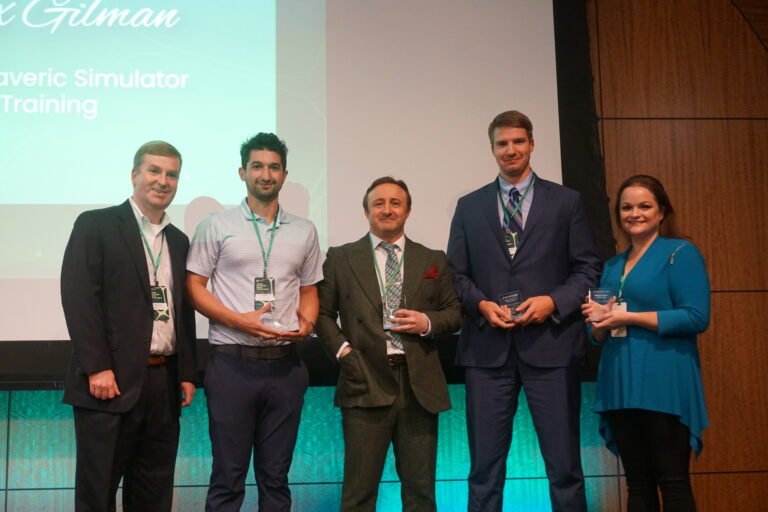
BioVentures presented its Innovation Awards during the 2026 UAMS Student Research Day, recognizing students whose research reflects creativity, scientific excellence, and an interest in translational science.  Student Research Day is an annual event that highlights the breadth of research being conducted across UAMS. The event brings together graduate and professional students, postdoctoral fellows, and medical house staff/fellows to share their work through poster presentations and to engage with faculty, researchers, and peers across the institution.  The BioVentures Innovation Awards recognize projects that demonstrate innovative thinking and research with the potential to contribute to future translational applications in medicine and health.  This year’s award recipients were:  BioVentures congratulates these students for their outstanding work and innovative approach to research. Their projects reflect the importance of early-stage scientific discovery and the role it can play in shaping future advances in medicine, diagnostics, and healthcare technologies.  Through initiatives like the BioVentures Innovation Awards, the office aims to encourage a spirit of innovation and highlight the potential of student-led research to contribute to the broader biomedical innovation ecosystem. 

Read More »
Innovation

New Patent Enables Enhanced Viral Production Using Engineered Human Cell Lines 

What’s the problem?  Viruses are essential tools in modern biotechnology, with applications in cancer immunotherapy, gene therapy, and vaccine development. However, producing viruses efficiently at clinical and commercial scale remains a major bottleneck. Many commonly used human cell lines, including the widely adopted A549 line, retain natural antiviral defense mechanisms that limit viral replication, resulting in lower yields and increased manufacturing costs.  One key antiviral factor is the human protein SAMD9, which restricts viral replication inside host cells. Its presence significantly reduces the efficiency of producing certain therapeutic viruses, including oncolytic viruses such as myxoma virus. This limitation slows research, clinical development, and commercialization of promising viral therapies.  What does this technology do?  This patent covers engineered human cell lines modified to eliminate or reduce expression of the antiviral host factor SAMD9, enabling significantly enhanced viral replication in vitro. By removing this natural antiviral restriction, the modified cells allow viruses to replicate more efficiently, increasing overall production yields.   The technology can be implemented using gene-editing approaches such as CRISPR-Cas9 to generate stable, virus-permissive cell lines suitable for research, clinical development, and manufacturing. These engineered cells have demonstrated improved production of oncolytic viruses, which are increasingly used as targeted cancer therapeutics and immunotherapies.  By improving viral replication efficiency, this innovation has the potential to:  This platform provides a practical and scalable solution for enhancing viral production using human cell lines compatible with therapeutic applications.  Inventor  Jia Liu, PhD, Associate Professor in the Department of Microbiology and Immunology at University of Arkansas for Medical Sciences (UAMS).

Read More »
Blog

BioVentures Receives Chancellor’s Circle Grant to Expand Student Innovation Training

BioVentures LLC has been awarded a $15,000 Chancellor’s Circle Grant to support the initiative “Empowering Student Innovation: Building an Innovation and Entrepreneurship Ecosystem at UAMS.” The program provides UAMS medical and STEM students with hands-on training in intellectual property, startup development, translational research, and commercialization. By integrating scientific research, technology transfer, and entrepreneurial education, it creates structured, experiential pathways for students and trainees to transform scientific ideas into innovations that improve the health and well-being of Arkansans. Megan Reed, Ph.D., MBA, senior licensing associate with BioVentures, accepted the grant on behalf of the organization. This initiative reflects BioVentures’ ongoing mission to bridge research and commercialization at UAMS and to empower the next generation of innovators working to translate discoveries into real-world health solutions.

Read More »
Events

BioVentures to Join the UAMS Showcase of Medical Discoveries 

Join us on October 22, from 4–6 PM at the Jack Stephens Spine Institute (12th Floor) for the next UAMS Showcase of Medical Discoveries, focused on UAMS intellectual property and innovations.  The event will feature technologies developed by UAMS researchers and supported through BioVentures, offering a look at discoveries with the potential to improve health outcomes and drive commercialization.  Visit the official event page for more details.  

Read More »
News

A New Approach to Overcome Immunotherapy Resistance 

Newly granted patent: U.S. Patent No. 12,268,674 B2, “Mi-2β Inhibitor as an Immunotherapy Agent”  What’s the problem?  Immune checkpoint therapies, such as anti-PD-1 antibodies (e.g. Keytruda, Opdivo), have transformed cancer treatment. Yet many patients either don’t respond at all or eventually develop resistance. This limits their long-term effectiveness, leaving a major gap in oncology care.  What does this technology do?  This patent covers novel small-molecule inhibitors that block the ATPase pocket of Mi-2β (CHD4), a chromatin remodeling protein identified as a key driver of PD-1 resistance.  One lead compound, Z36-MP5, restores responsiveness to PD-1 therapy by:  By directly targeting tumor-intrinsic resistance mechanisms, Mi-2β inhibitors open the door to a first-in-class therapeutic strategy to make immunotherapy work for more patients. 

Read More »
Events

BioVentures to Participate in the TRI Research Expo 2025 

BioVentures will be present at the Translational Research Institute (TRI) Research Expo 2025, taking place Wednesday, September 10, from 4:00 to 6:00 p.m. CDT at the Reynolds Institute on Aging, First Floor.  The Expo brings together more than 50 research services across UAMS, providing investigators with the opportunity to explore resources, build connections, and learn about available support for advancing their work. Visitors can stop by the BioVentures table to discuss invention disclosures, licensing, commercialization pathways, and opportunities to bring biomedical innovations to market.  Don’t miss the chance to connect with colleagues, enjoy refreshments, and learn how BioVentures can support your research journey.  👉 Register here

Read More »
Blog

From Disclosure to Market: How the BioVentures Process Works 

Curious how an idea becomes a protected invention at UAMS?  At BioVentures, we guide innovators through every step, from disclosure to patent decisions and market strategy. Here’s how the process works, what to expect, and how we support you along the way. 1) Submit Your Invention Disclosure  The first step is fully and adequately disclosing your invention to BioVentures by submitting an invention disclosure. Even if you’ve already reached out to schedule a meeting, we require a disclosure to initiate the process. It allows us to review the technology in advance, and gather essential information on compliance, funding, and inventorship.  We’ve recently adopted a new AI-powered disclosure platform to simplify the process. You can upload relevant documents—papers, figures, posters, presentations—and the system will generate a draft disclosure for you to review and edit before submission:  👉 Submit your disclosure  The form captures a complete overview of your invention, its potential applications, and any existing data or prototypes. Once submitted, BioVentures typically reviews the disclosure within 1–2 weeks before scheduling a meeting with you.  Typical timing: BioVentures review in 1–2 weeks.  2) Meeting with the Technology Manager  We meet with the inventor to clarify the technology, confirm federal compliance needs, capture inventor and funding information, and discuss long‑term goals and commercialization paths.  Typical timing: Scheduled within 1–2 weeks after disclosure review.  3) P&CC Decision (Patent & Copyright Committee)  The inventor presents at the P&CC. This committee reviews the presented technology and makes a determination on how the technology should be protected. Outcomes can include:  Typical timing: P&CC is usually scheduled 1–2 months after acceptance of the disclosure.  4) Protection Strategy Based on P&CC Outcome  The legal protection route follows the P&CC decision. If a provisional patent filing is recommended, we move quickly to secure a priority date and a 12‑month window to strengthen data and assess market potential. This is because in the United States is a first to file country which means that the right to a patent generally belongs to whichever inventor files an application with the USPTO first, not to whoever first conceives the idea. As such, protecting your invention in a timely manner is important to us.   Typical timing: Provisional filing is typically completed within a few weeks of the P&CC meeting.  5) Marketing and Commercial Pathways  If the inventor agrees, we begin targeted outreach. Options include:  Why Early Disclosure Matters  Submitting your invention disclosure early is essential. It helps preserve your patent rights before any public disclosure or publication, ensuring your ability to pursue protection. Early disclosure also allows BioVentures to align your IP strategy with funding sources and compliance requirements, and accelerates our ability to evaluate the market potential and identify relevant partners.  This overview is for general information and does not constitute legal advice. Specific strategies and timelines may vary by technology.  Have an invention to disclose? Submit your disclosure now!

Read More »