BioVentures is preparing to welcome 13 participants to the newest cohort of the Cancer and Developing Entrepreneurial Technologies (CADET) program, continuing its mission to equip cancer researchers with the skills, mentorship, and entrepreneurial experience needed to translate scientific discoveries into real-world innovations.
The new cohort will begin September 4, 2026, marking an important step forward for CADET as the program expands into a year-long training experience. The extended format will give participants more time to deepen their understanding of technology commercialization and apply those skills to cancer-related innovations.
Throughout the program, graduate and postdoctoral trainees will explore key areas of the commercialization process, including intellectual property, regulatory pathways, market analysis, funding strategies, customer discovery, and business development. Participants will work with real UAMS-developed technologies and receive guidance from BioVentures staff, faculty, industry experts, and entrepreneurial mentors.
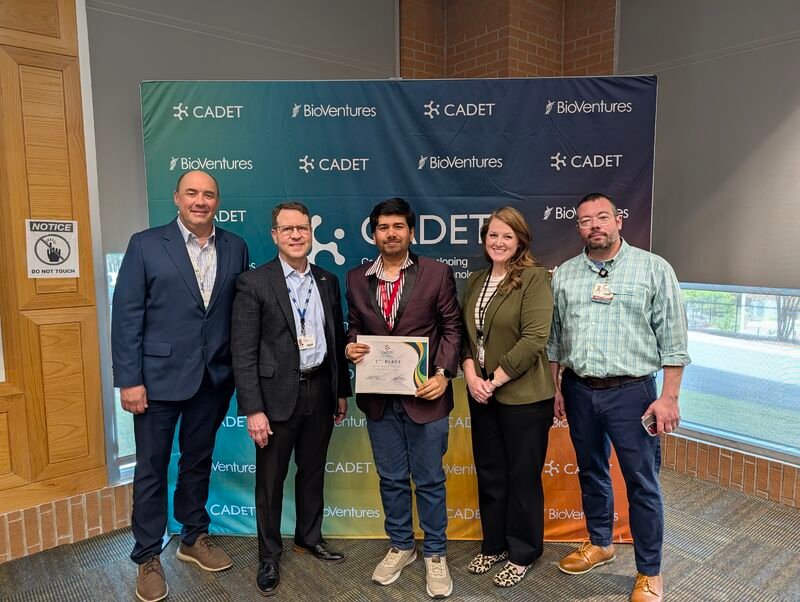
The new cohort builds on the success of CADET’s inaugural group, which brought together eight participants for hands-on training in biomedical entrepreneurship and commercialization. The inaugural program concluded in May with a final pitch competition and showcase, where participants presented commercialization strategies developed throughout the course.
“We’re excited to build on the momentum of CADET’s inaugural cohort and welcome a new group of researchers into the program,” said Allison Thompson, M.Ed., Program Manager at BioVentures. “Expanding CADET into a year-long experience gives participants more time to engage with mentors, work hands-on with promising UAMS technologies, and develop a deeper understanding of what it takes to move cancer discoveries from the lab toward real-world impact.”
CADET is supported by a National Cancer Institute R25 education and training grant and is designed to strengthen the connection between scientific research, entrepreneurship, and technology commercialization. By providing researchers with practical experience beyond the laboratory, the program aims to help accelerate promising cancer innovations toward products and solutions that can ultimately benefit patients.
The new cohort begins September 4 and will continue throughout the 2026–2027 academic year.